Corporate values, empty words in an organization that are talked about, but no one lives by them.
Jul 1, 2023

Corporate values have become increasingly important parts of modern organizations in recent years. Many companies promote them as a key element of their business and integrate them into their corporate culture. However, there are organizations where corporate values are merely empty words that have no real impact on employee behavior or on the functioning of the company as a whole.
Our measurements indicate that nearly a third of employees in the Czech Republic feel that the vision or values of their organization contain too much general fluff, and almost half of the employees cannot name their organization's values.
Regarding the alignment of management behavior with the set values and conduct, more than a third of employees believe that management does not act according to them.
Lack of Loyalty to Corporate Values
The lack of loyalty to corporate values leads to decreased engagement and the forming of isolated subcultures within individual teams. Simply put, everyone creates their own values and follows them.
In our projects on transforming corporate culture, we see that this leads to conflicts and ineffective work between different teams. The reason is not that members of one team are better than those working in other teams, but it is precisely the absence of shared values/behavior norms within the company and usually also shared goals that causes a higher degree of disagreement.
Insufficient Example from Leadership
A significant role in the life of corporate values is played by the organization's leadership. If managers and leaders do not themselves adhere to the established values, it is unlikely that employees will take them seriously.
For example, if a company declares the value of transparency, but the reality is the opposite, employees quickly realize that the words of leadership are not backed by actions. This erodes trust and the meaning of values in the organization is lost.
The process of changing behavior itself is not easy at all. It has been measured that 90% of people are resistant to change. Therefore, the example set by leadership and the consistent adherence to corporate values by company management in everyday activities is essential for successful implementation.
Lack of Employee Engagement
Another factor contributing to the emptiness of corporate values is the lack of employee engagement in the creation and implementation of values. When values are imposed from the top down, irrespective of employees' opinions and feedback, they are likely to see them as imposed constraints.
When they do not identify with the values and do not feel that they have a share in their creation, there is no reason for them to fulfill them. Therefore, we recommend involving about 15% of the organization in defining the values and desired behavior. We strategically select ambassadors who then help alongside the management population of the organization in implementing the change.
Insufficient Emphasis on Implementation
Culture is created through interaction. Values and norms of behavior only become lived when they are actually fulfilled in the real world of the everyday functioning of all teams in the organization.
At the moment when I have these norms established, I must review them within each team and ascertain their real significance in the activities that the teams engage in on a regular basis. There are certainly differences: innovation in marketing will have a different significance than in the finance team or legal department. If I invest energy into this translation in regular operations, it will return to me in increased efficiency, especially in X functional activities.
On the contrary, if I underestimate the implementation, the situation in the organization can paradoxically worsen. For example, promoting diversity that is not supported by actions can cause more harm than good. Statements like "we do not discriminate" create the impression that the organization has achieved equality and fairness, even though this is not the case in reality. Alternatively, management may contradict this with their actual behavior and does not penalize employees who demonstrably violate the "diversity" rules. A paradoxically strong culture is characterized by a lack of tolerance for undesired behavior.
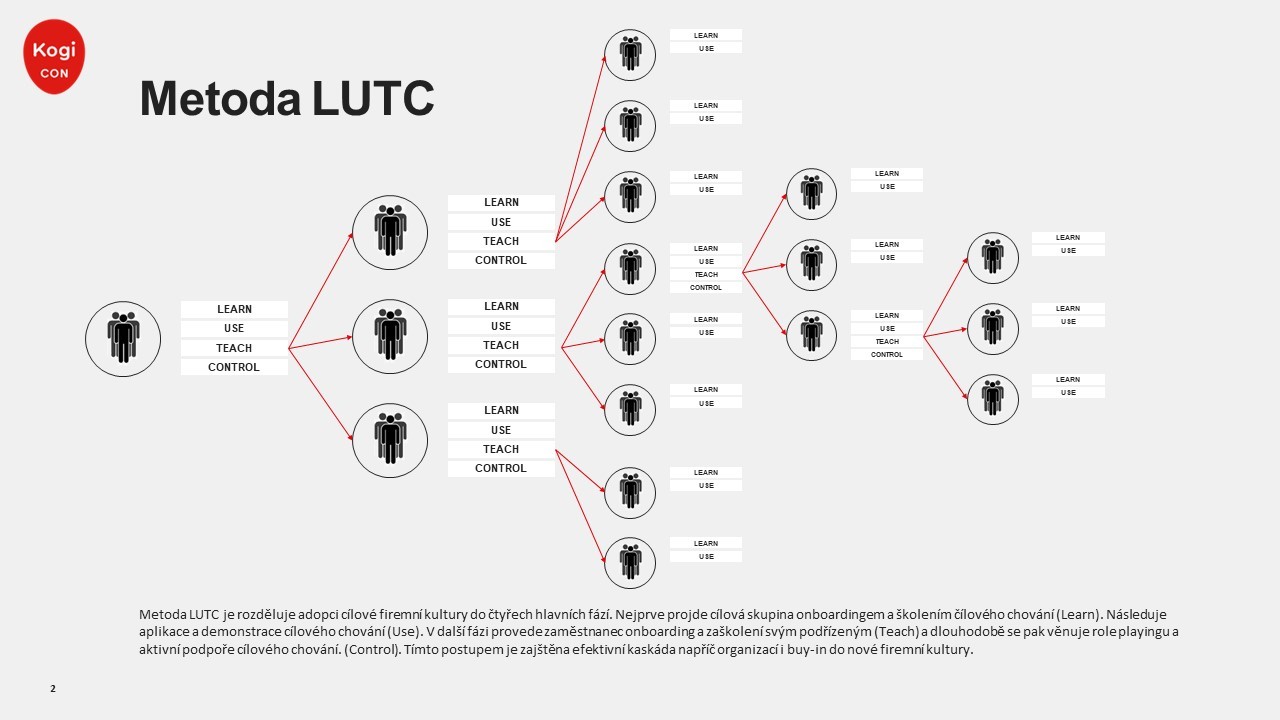
LUTC Method – learn, use, teach, control
Lack of Consistency and Measurability
Corporate values should be consistent and measurable. If they are formulated in general terms and not clearly defined, it is difficult to incorporate them into everyday work procedures and decision-making. Without a clear system of evaluation and feedback, it is impossible to measure and appreciate employees’ adherence to the values. This diminishes their significance and meaning.
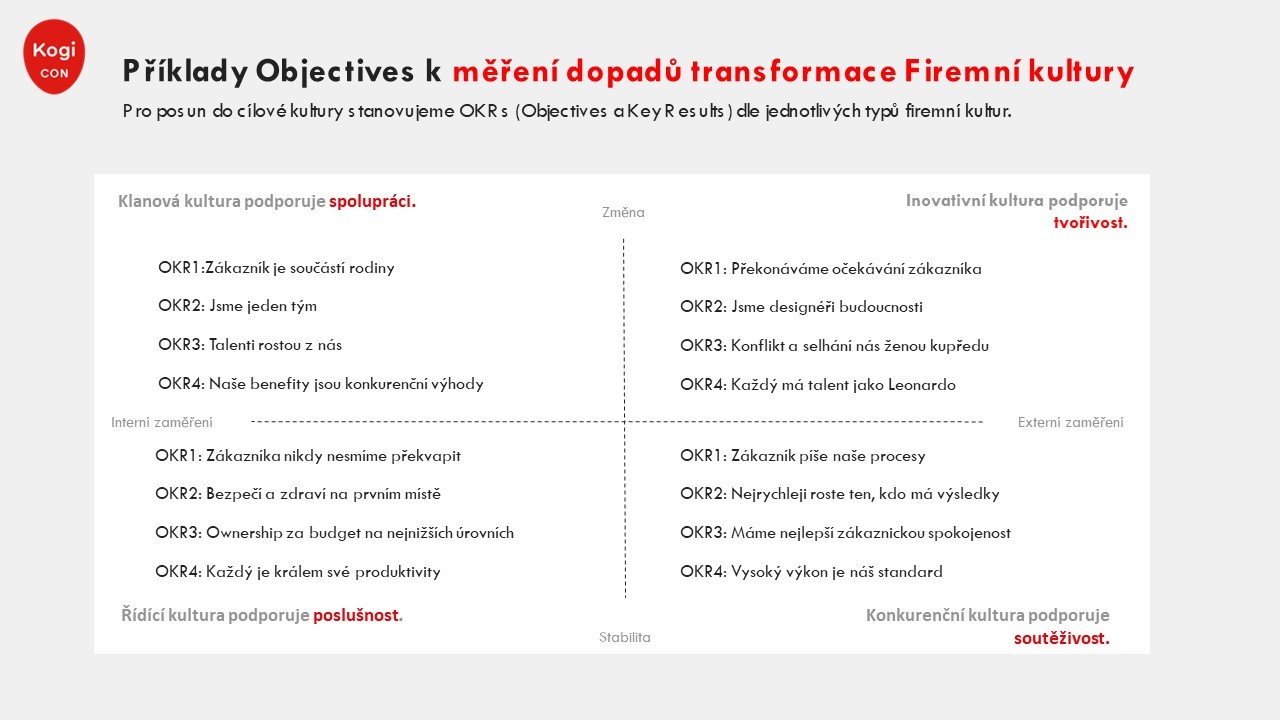
OKRs – Objectives Key Results
Conclusion
Corporate values and behavior norms can be a powerful tool for creating a healthy corporate culture and ensuring the success of the organization.
However, if they are only empty words that no one lives by, they lose their power and influence. For corporate values to have real meaning, it is essential that they are actively supported and lived by the organization's leadership and employees. They must be consistent, measurable, and part of everyday work practices. Only then can they provide a solid foundation for the prosperity and long-term success of the organization.