Why changes in companies often fail. Without a smart goal and thorough preparation, you will not deliver the project.
Nov 19, 2025

Samo and Seto. Two legendary task finishers who often serve more as hope than reality in the corporate world. However, they do not appear in the list of reasons why changes fail to be completed. And that's a good thing.
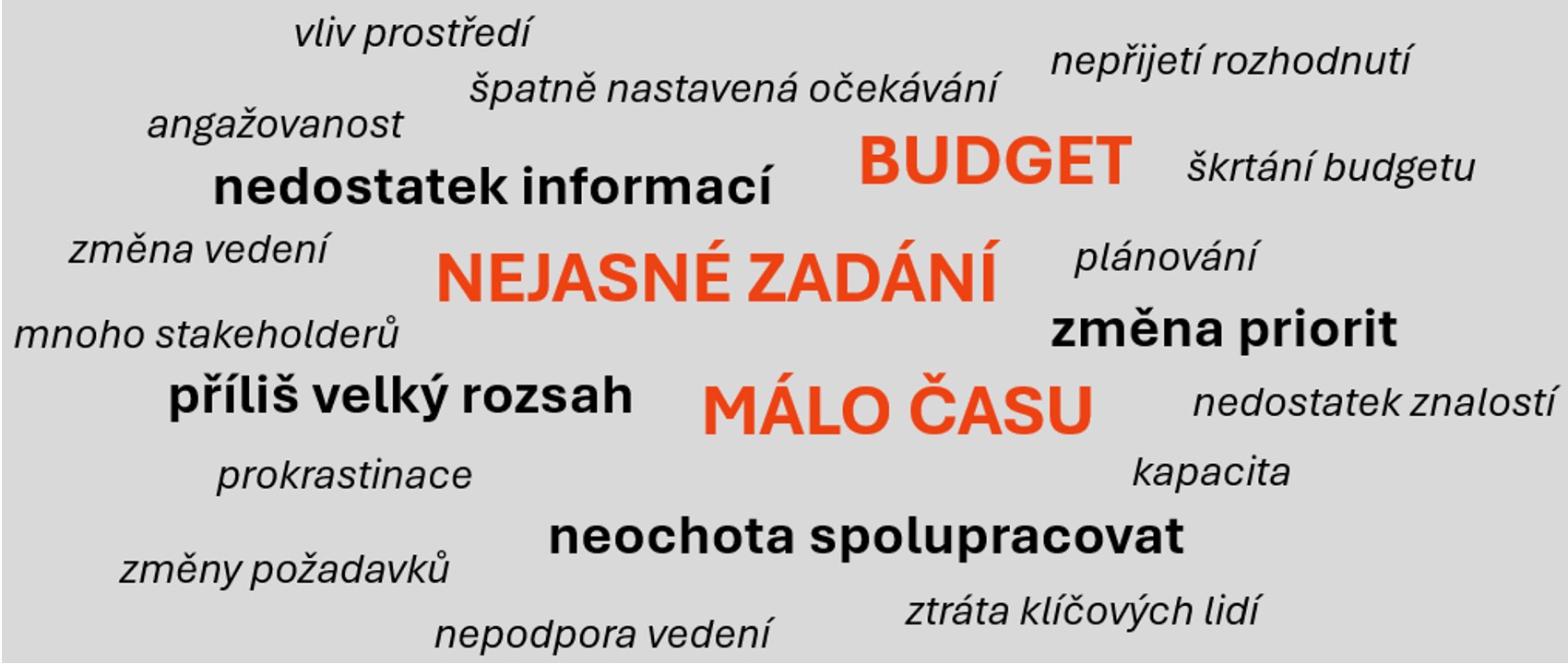
In the last five years, I have had the opportunity to observe dozens of change and innovation projects across various industries. And although the companies varied in size and focus, the same causes of failure recurred. They can be summarized into three points, as can the path to avoid them.
The most common reasons for failure when implementing changes:
Poorly defined goal
Incorrect estimation of time
Lack of resources
On the surface, nothing revolutionary. However, it is precisely these three failures that fundamentally determine whether you will complete the change or if it will remain only a presentation. And that’s why we will take a closer look at them.
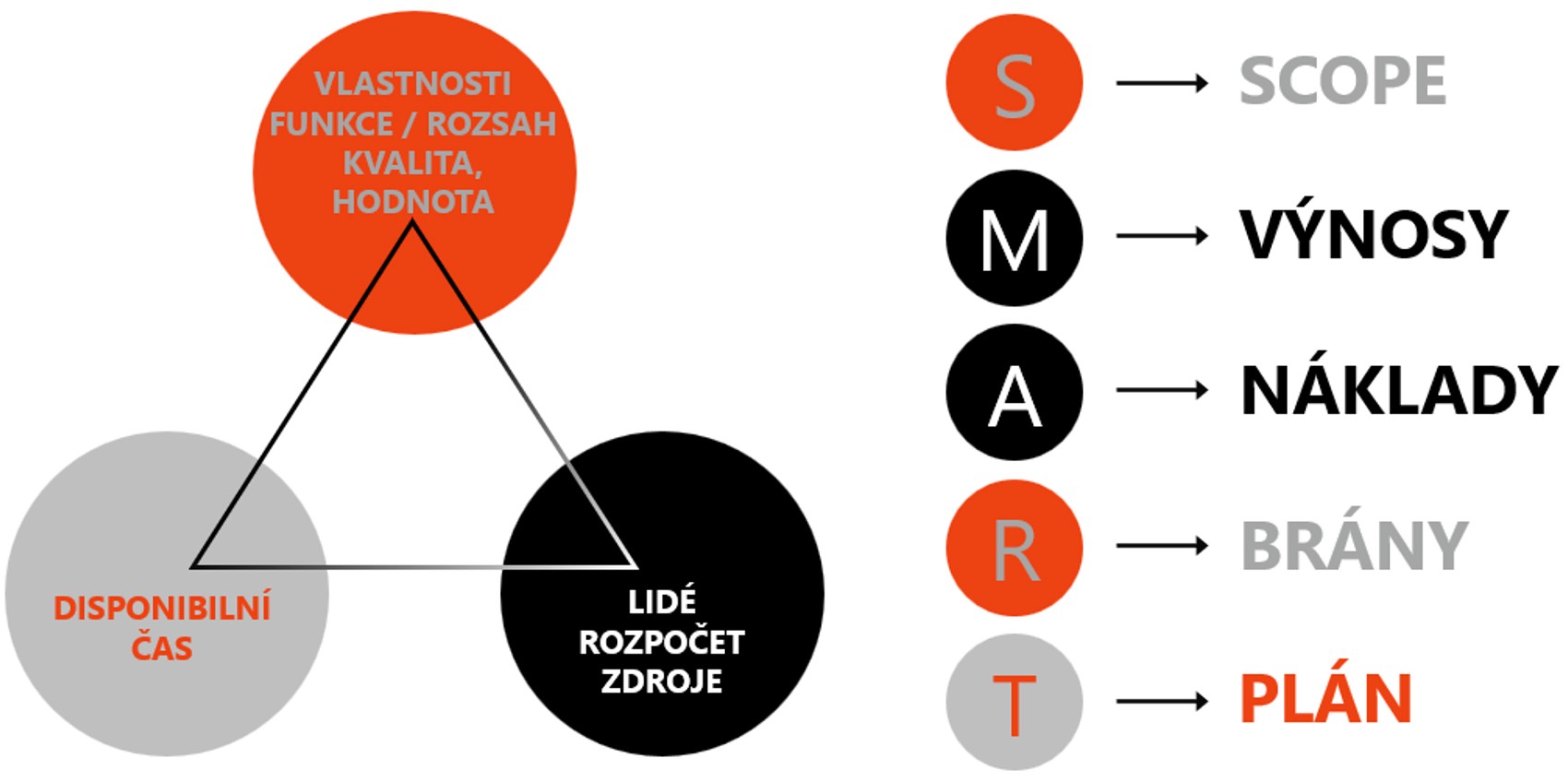
No surprise here. It's about the basic project triple constraint: goal, time, and capacity. However, it is their quality that determines whether you will one day celebrate results or just explain retrospectively why it didn’t work out. A thorough definition, planning, and control of these three factors is fundamental. Evaluation can then be the icing on the cake. But only if you actually bake that cake.
1. If you don’t know where you’re going, it doesn’t matter which path you take
A paraphrase of the conversation between Alice and the Cheshire Cat from Lewis Carroll's book also offers the interpretation that you simply won't reach that goal. Therefore, defining the goal is absolutely critical for defining the entire project brief. The SMART methodology allows you to define the goal in a way that enables the elaboration of the entire project triple constraint.
The SMART methodology offers a structured way to define the goal so that it can be developed into a specific procedure. Each letter has its significance; every aspect plays a key role:
S - If the goal is defined sufficiently Specifically, it sets the priority Scope of the project. It defines the desired properties, functions, and quality. The vision of what I want to deliver, what need I want to satisfy. Detailed requirements during the planning phase then represent the clarifying detail that must be prioritized, for example, using the MOSCOW method.
M - The biggest challenge is to establish the correct Measurability. What is it that I want to measure? It’s easy to slip into defining “operational KPIs”: we delivered on time, within the designated budget, we delivered everything requested.
No. Those are merely proofs that we planned well and had discipline. What we want to measure is the change that we initiated the project for. The value that we generated. Why? Because the measure of achievement forms the entire revenue part of our business case. We don’t build a house to pat ourselves on the back for having the same number of rooms as we planned and for coordinating deliveries so that we can move in at Christmas. We wanted to build for enhanced quality of life, privacy, tranquility, being away from the city center, and tomatoes from our own garden. That was the reason, and those are our KPIs.
Typical business KPIs for projects within talent programs can then include:
Reduced onboarding time for new employees by 30 days
Time savings in processing orders due to automation by 50%
Reduction in costs per unit of production by 15%
Increase in NPS by 5 points
A - Acceptable goal is then one that we can deliver. It is a reality pointing to the availability of resources, knowledge, expertise, and people. Logically, it highlights the cost side of the project and represents its structure.
R - I prefer to define as Relevant. It is the definition of assumptions and an environment that ensures the actual intended benefit. It involves verifying assumptions in our project Business Case at control points, milestones, or approval “gates.” If relevance is lost, it is rational to stop the project or redefine it. Otherwise, we will not ensure the return on investment made.
T - Timeliness of the project goal at this early stage, before actual planning, represents an input for the project triple constraint, taking into account cyclical needs of the organization such as sales peaks at the end of October connected with “Back to School.”
2. Goal as an entry point for the entire project
SMART goal becomes the key input for the entire initiation phase of the project, in which we define:
SCOPE in its positive form = what we want to deliver, and in its negative form = what the deliverable is not. This clarifies our own thoughts and simultaneously sets expectations for stakeholders. OUT OF SCOPE is everything that unreasonably undermines the project's economics and prolongs the delivery time. It is the first test of our discipline and our ability to communicate clearly internally.
BUSINESS CASE or its logical structure. Costs are most easily quantified. They stem from the definition of scope where each delivered item has its price. We define here the number, the size of our budget envelope that we want to request. Revenues then derive from the delivered value according to measured KPIs. What can be valued belongs here. We compare the resulting number with costs and seek return. A third well-established category is qualitative benefits, difficult-to-measure positive values that are indisputable and argue in favor of project realization. We work with assumptions, which we substantiate with data preparation.
TIMETABLE represents the basic sequence of activities associated with delivering the scope and utilizing the budget. We always consider both parameters of project time:
Time needed to perform the task, which simultaneously represents part of the project costs
Time during which the needed resource is allocated to the activity, input indicating the duration of the project
For a simple draft of the timetable, understanding logical relationships and possible time synergies when overlapping multiple resources, I recommend the post-it method, which involves writing key activities on notes with estimated durations and placing them on a timeline. When resources overlap, the overall delivery time is shorter than the sum of individual activity times.
3. Preparation is not a delay. It is an accelerator
A well-prepared project enables:
clear communication,
rational allocation of priorities and resources,
building a project team with the necessary expertise,
keeping direction, time, and budget under control,
setting governance and stakeholder management.
If you want to deliver innovation, implement change, or bring a new product, start with careful preparation. Invest time, energy, and money into it. It is here that ownership arises – the feeling that the change has its owner who stands behind it.
And Samo and Seto? They can continue to put their feet up. Their services will not be needed by you.