The assignment is not enough: context determines the success of the project.
Jul 14, 2025

"Do it." — OK, but… For whom? Why? And what will happen with it then?
I often hear this sentence in various forms.
And I admit – I have occasionally said it myself. Especially when I was under time pressure, had been working on the topic for a long time, or assumed that the topic was self-explanatory.
However, every time I assigned a task without sufficient context, one of these situations occurred:
A colleague/subordinate added something, but it was completely off.
The output had form, but zero impact on implementation.
The work did not progress at all because… it was not clear why.
And so I started paying more attention to one thing: context.
Why is context more important than the task itself
A task like "Please write me a presentation for the workshop" is useless when I don't say:
Who will be at the workshop?
What mood do I expect there?
What should be the main impression that participants take away?
What are my expectations for the objectives that the workshop should achieve?
Without that, I will create a slide-show, but not a tool that really works and provides the basis/framework for achieving the expected goals
What has worked for me in practice
When we prepare new programs for culturally transformative workshops with the team, we automatically ask:
Where is the company in time right now?
What have people experienced internally in recent months? How do external factors affect the company?
What does management realistically expect from the change?
And we often realize that the “content” itself is secondary. The primary is the framework into which we place it. We have created our own checklist of information necessary for correctly understanding the client's context.
What must be mentioned when assigning a task or project
My personal “five,” which is based on the 5C Model (Content, Context, Constraints, Consequences, Communication)
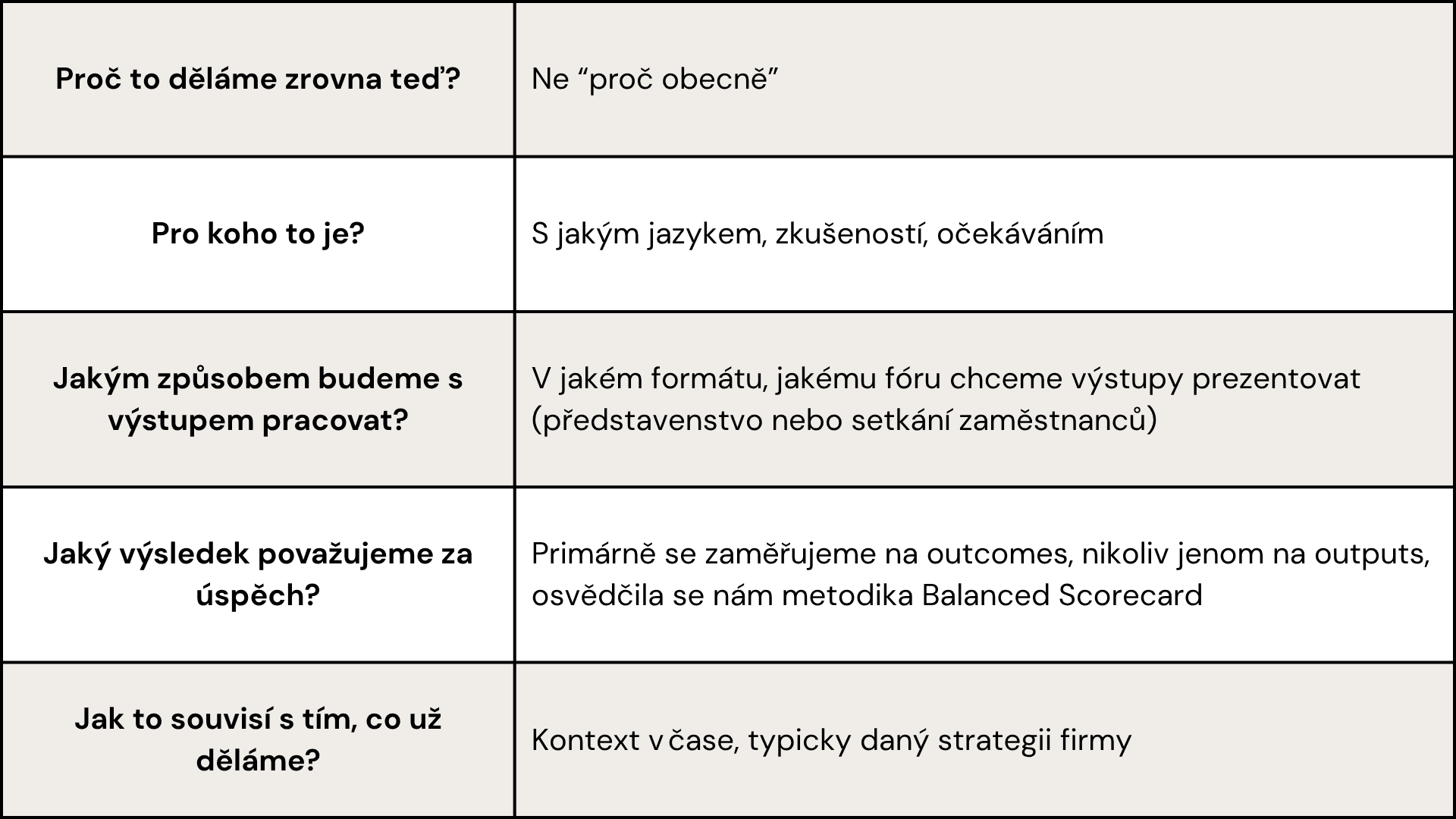
The most common mistakes I see in teams:
A task is assigned without stating “why” and the output is formally correct, but lifeless.
The assignment is too general, everyone interprets it in their own way.
There is a lack of information about what will happen with the result next – so prioritization is not possible.
In conclusion
Since I have been paying more attention to context, my work has become faster, the results are more accurate – and most importantly: people are not frustrated by misunderstood assignments. The key is always to understand the motivation of the people to whom the assignments are addressed. They need to find their "What is in it for me?". Context is not an unnecessary luxury. It helps people understand the meaning of what they are doing.
It’s not about doing more.
It’s about doing it right – thanks to knowing why and for whom.