Culture fit recruitment rules: 4 steps to improve the results of the recruitment process
Nov 12, 2023

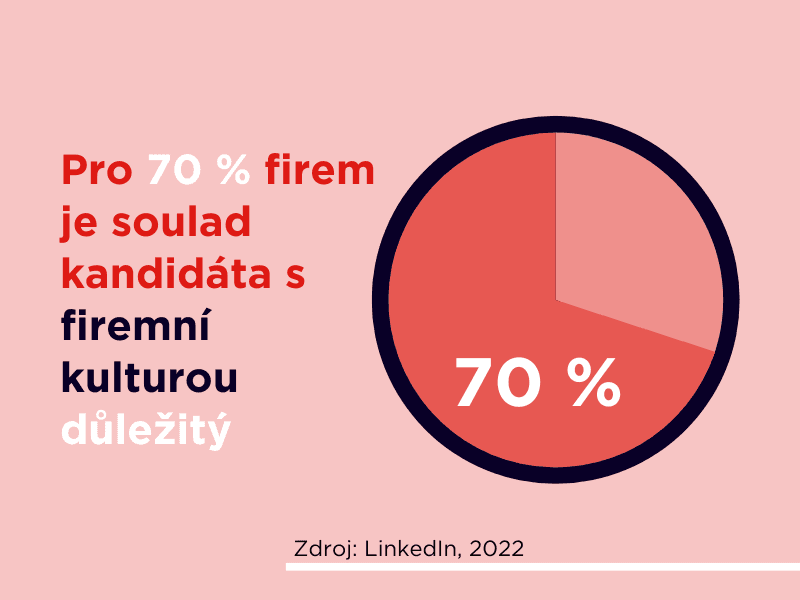
According to a study by LinkedIn from 2022, the alignment of a candidate's personality with the company culture is one of the most important factors that companies consider when selecting candidates. Nearly 70% of companies stated that this alignment is very important or at least important for their selection.
Companies logically reflect the emerging trend where employees increasingly seek not only a job position but also a place that corresponds with their values and working style.
Unfortunately, only a fraction of companies can support this statement with real data and recruitment processes. HR departments often look for this cultural "fit" in the candidate's professional history (if it worked in a company of the same industry and size, it will probably work for us too), or they consciously or unconsciously evaluate sympathies, feelings, and similarities.
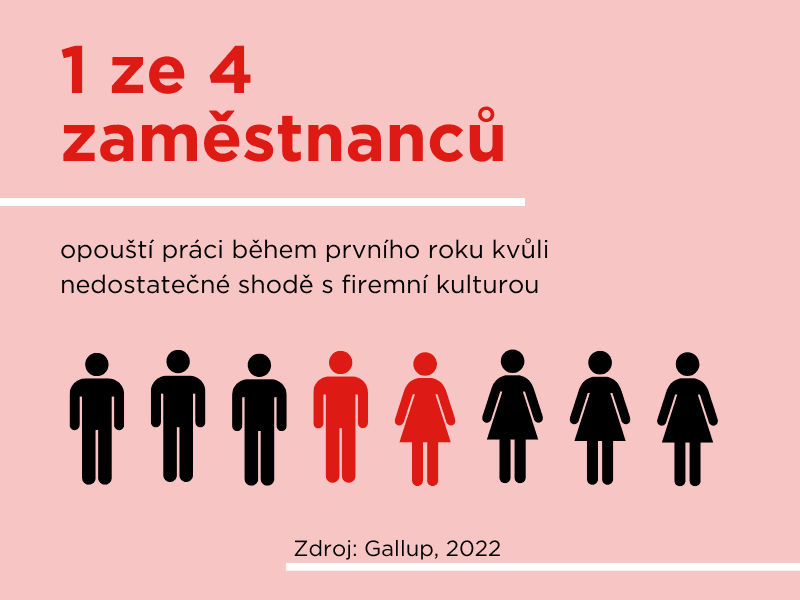
Sometimes they try to lean on official company values (some are more proclaimed than lived), which they then directly inquire about with the candidate in order to get a positive response (a savvy candidate will learn these values ahead of time). More than 25% of employees leave their jobs during the first year precisely due to poor cultural fit (Gallup, 2022).
So, how should a company proceed if it decides to give rules to this random and often highly subjective process?
STEP NUMBER 1: Definition of Desired Company Culture
The first and fundamental step is a clearly defined desired company culture. Naming and identifying basic values and behavioral norms is crucial not only for strategic management of the company but will significantly ease the life of all employees (whether current or future). How to achieve this and what types of company cultures we may encounter in the market can be aided by this text about company culture.
STEP NUMBER 2: Culture Fit Job Description
The main pre-selection of candidates in terms of personality-cultural fit is usually the responsibility of the job advertisement. The right one will not only describe the company culture but will also have a tone that corresponds with that culture. However, without the assumption of knowledge of the actually lived and especially desired company culture across the company, writing such an advertisement is very difficult.
It can also be complicated to use general buzzwords like "fun, fast-paced, collaborative, professional..." that can be perceived differently by different types of people.
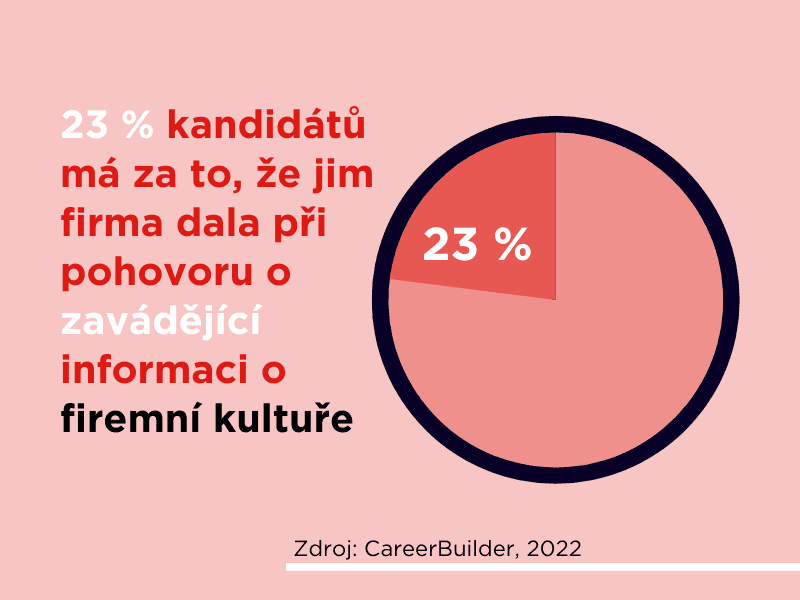
Perhaps that is why 23% of candidates feel that they were misled about the company culture during the recruitment process (CareerBuilder, 2022).
Unfortunately, even if a candidate is familiarized with the correct way about the right cultural reality, it may be that they themselves are unaware of their personal predispositions or limits that are expected from cultural fit, or they intentionally distort these qualities.
STEP NUMBER 3: Culture Fit Competency Model
Mapping personality traits and typical behaviors that are desirable or conversely risky for alignment with the given company culture can be the key that usually significantly improves and streamlines recruitment across positions. According to a study by Personio from 2023, nearly 62% of HR professionals in the Czech Republic use some type of competency model for company culture. They typically focus on areas such as communication, teamwork, problem-solving, creativity, adaptability, or resilience.
Even so, in practice, we often encounter personality predispositions that do not align with certain types of company cultures and still pass through the figurative recruitment sieve. Common examples include:
Creativity and courage: competences that are typical for individuals who are able to come up with new, unconventional ideas and thoughts, and are usually a great asset for innovation-oriented companies. Conversely, this personality setting can be a source of frustration or dissatisfaction in a strictly hierarchical environment that demands order and rules.
Stability and structure are personality characteristics that will be helpful in companies that require order and discipline. Such people may suffer significantly in the dynamics of younger, fast-growing companies, which may seem chaotic, unclear, and difficult for them to navigate.
Teamwork and empathy are qualities that are foundational in environments with cooperative cultures. They may be a disadvantage in market-oriented and customer-oriented companies, where such individuals may feel alone, overlooked, and may struggle to find motivation while working independently.
Ambition and independence: traits that are a tremendous benefit in cultures focused on performance and results. Conversely, they may be misunderstood in collaboration-oriented companies.
Of course, even in such cases, we find exceptions that prove the rule, and some characteristics may be more or less problematic in the context of individual company roles. It is always good to be aware of any potential risks (both from the candidate's side and from the employer's side) and to work further with this risk in the case of concluding an employment agreement.
STEP NUMBER 4: Implementation into the Recruitment Process
For simple orientation on whether a person "endures" in a given environment because of or despite their personality, a basic orientation questionnaire such as Culture fit (KogiCon, CulturelQ) can be useful. In such types of questionnaires, we can track the alignment of the required competencies with those that the candidate indicates in the questionnaire. The advantage is a quick insight; the disadvantage may be potential stylization by candidates who are trying to create an impression that will resonate in the given culture.
A skilled recruiter can help by conducting in-depth questioning, which indirectly targets the candidate's values and settings through open-ended questions. This way, the candidate may talk more about their cultural preferences and better justify the potential fit. The disadvantage may be randomness and subjective bias from the personality of the interviewer.
For more detailed and precise analysis, it is advisable to work with a range of personality questionnaires (MBTI, TCConline, StrengthsFinder 2.0) that comprehensively map the candidate's personality. The advantages are more valid outputs, but the disadvantage may be more challenging interpretation.
Alternatively, one can rely on a combination of multiple methods.
Why is considering company values in recruitment important?
Personality-cultural match brings numerous advantages to both sides. The seemingly small details and anchored procedures mentioned above, which the recruitment team considers in its processes and decision-making, can greatly impact:
Overall improvement in recruitment quality and reduction of costs related to bad hires, whether direct costs if the candidate leaves during the probationary period or indirect costs affecting lower productivity, increased need for training, negative influences on existing company culture, etc.
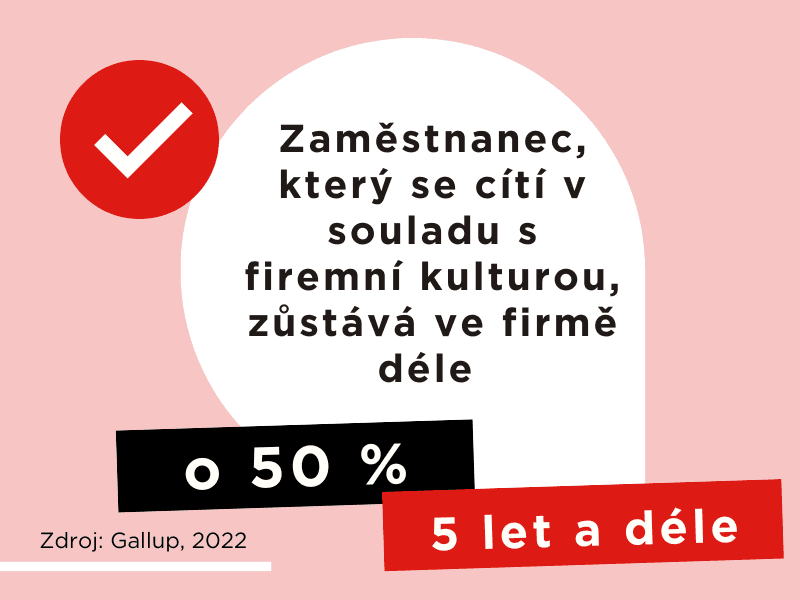
Better recruitment quality is also linked to better employee retention. Employees who feel aligned with the company culture have a 50% higher likelihood of staying in the organization for 5 years or more (Gallup, 2022).
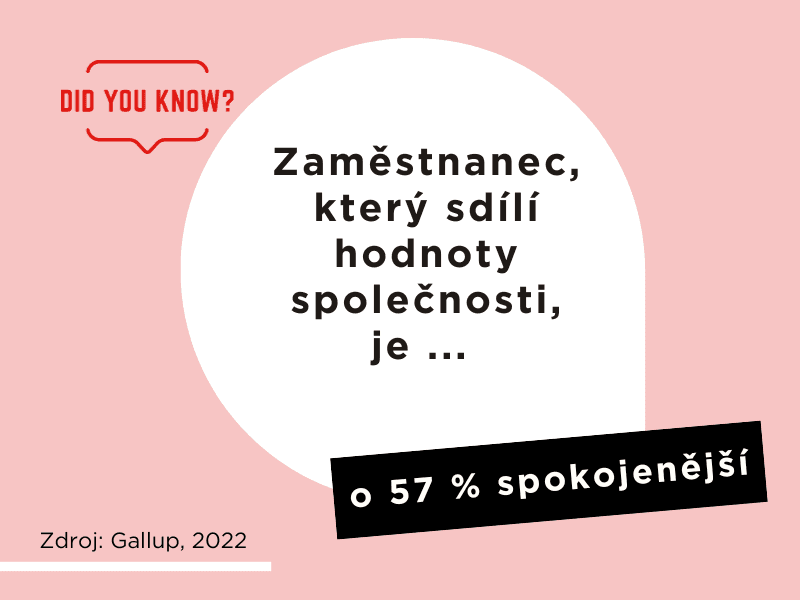
Employees who share values in their company are 57% more satisfied with their jobs (Gallup, 2022).
Stronger team dynamics – candidates who fit into the company culture will collaborate better with other team members and will overall have better relationships, showing more mutual respect and better collaboration.
Strengthening Employer Branding. Organizations that can effectively communicate company values and their own brand are seen as more attractive employers.
Although considering company culture in recruitment is not a new thing, and many companies are starting to take it into account more and more, the quality and systematic nature of this process still varies across companies.
Weaknesses often occur, particularly in the inaccuracies of described company culture (often more related to subcultures and personal preferences), subjective evaluations of candidate fit, and excessive reliance on the truthfulness and self-insight of candidates.
Clear definitions of the actually lived and desired company culture and specific recruitment methodologies that reflect the company culture can profoundly influence not only the quality of the recruitment process itself but also key economic indicators.